Testimony of an Ayt Ndir woman

Before I believed, I was really sick.  I had a lot of health problems, especially with my head. However, I still continued my prayers all the time even though my sister would tell me, “It’s too much for you to keep moving your head up and down.”

At night both of us would sleep in the same room.  My sister listened a lot to the radio.  She really liked a program about Jesus Christ.  Even though I listened to that program, I still did my prayers. One day I put a cassette about Jesus, how he did many miracles and healed people who were sick and paralyzed. I understood the power he had, and I believed in him.

From that time on the problems that I had disappeared.  He healed me, and I believe in him now. He changed my life so much, because he gives eternal life, peace and love. I know now that he died for me and that he has gone up to heaven.

Amazigh proverbs

Amazigh Proverbs from the Newspaper Agraw Amazigh

Those Before Us Have Spoken

Our ancestors didn’t leave us anything to say; they’ve said it all.

1.    Today at your place, tomorrow at mine.

Emphasizes the need to help each other, since we are all vulnerable to the same types of problems.

2.    Weaving at night brings a big laugh in the day.

Weaving at night (when you can’t see) results in a laughable outcome (which you only realize when the daylight comes).  If you don’t work/buy/etc. in proper conditions, the outcome will be less than desirable.

3.    Feed your enemy first, then kill him.

Emphasizes the importance of hospitality.

4.    Dress your children up nicely; people don’t know what they’ve eaten.

People care about and notice the outward appearance.  If you want respect and to avoid gossip, dress your kids well.  What you feed them isn’t at all important, since people don’t see that.  Appearances matter.

5.    Play with a puppy, and he’ll lick your mouth [which is not desirable].

Normally one should be firm with a dog, since it is meant to do work for you.  It is not a pet as in France.  If you aren’t firm, the dog will take advantage of you.  In the same way, treating certain people or certain classes of people in certain ways may result in their passing certain social limits with you and taking advantage of you.

6.    God will not take the cat away from the mice.

Can be said, for example, when the authorities catch a criminal.  This extols the power of authority.

7.    The thing is better than its price.

When people value something they gladly pay for it.  They want the thing more than the money it takes to buy it.

8.    They fought over the feeding trough before they had the donkey.

Can be said when people are arguing about things that aren’t currently relevant or won’t matter until sometime in the future.

9.    There are no bees without stingers.

When you choose to interact with potentially dangerous or nasty people or situations, don’t be surprised if you get hurt.

10.    Only a jujube tree keeps the grass around it.

A jujube tree has thorns and so keeps people and animals from coming near it and ruining or eating the grass around it.  This proverb can be said to disapprove of the stingy person who defends his possessions against the desires of others.  It can also be said to illustrate the modest possessions that a generous and helpful person may have.

11.    Boastfulness doesn’t fill up sacks.

Boasting is empty and nothing compared to real actions.

12.    They don’t run when they aren’t fed.

You can’t get something without giving something.

13.    The mill doesn’t grind without grain.

Words and promises are empty.  There need to be actions, deeds, something concrete.

14.    One horseman doesn’t stir up dust.

Emphasizes the importance of community, working together.

15.    Only a bull licks itself.

Said to a proud person, someone enamoured with himself.

16.    Only the dead are silent.

Used to encourage someone to speak up for his rights or just to encourage a silent person    in a group to say something.

17.    A wolf doesn’t save pieces of meat.

Don’t be like the wolf, which eats the entire lamb right away and doesn’t save any. Instead, think about and plan for the future.

18.    Only clay stops water.

Said to encourage the giving of a real solution, not just a partial or inadequate solution.

19.    There is no glory without death.

Emphasizes the need for sacrifice.  No pain, no gain.

20.    It’s only the empty grain that the wind takes away.

Failing at something you didn’t prepare for or work for shouldn’t be surprising.

21.    Only a snake goes on its stomach.

Said to dissuade or disapprove of secret, sneaky, or dishonest actions.

22.    The sickle cuts only the hand of the novice.

Said to encourage experience and intelligence.

23.    If you didn’t do anything, don’t fear anything.

If you are innocent, you have nothing to fear.

24.    What you are saying to me, say to yourself.

Said to a hypocrite.

25.    He who gathers the wood will be warm by it.

You need to rely on yourself and not be dependent on others.  The one who does the work will benefit from it.

26.    He who hits himself doesn’t cry.

Don’t complain about problems that are of your own doing.

27.    He who  let it cool never ate it [the “it” being food or a meal literally].

Act now while the opportunity is there.  Strike while the iron is hot.  Also said of love:  if you let the relationship “cool down,” don’t expect it to last.  She/he will go somewhere else and leave you.

28.    He who is holding the sky above us, let him drop it on us.

Said to or about someone who is pretending to be great and hold power over us. “You think you hold up the sky over me?  Go ahead, drop it on me.  I don’t fear you.  Only God is the one who holds that kind of power.”

29.    He who has been frightened by a snake, even a rope makes him jump.

Previous bad experiences can cause us to react strongly to things that even just resemble those experiences.

These proverbs were taken from “Nnan  wi-lli   zrinin,” Agraw Amazigh, September 15, 2004, number 131,  p. 12.  The original article was written in Tifinagh script.

The crow

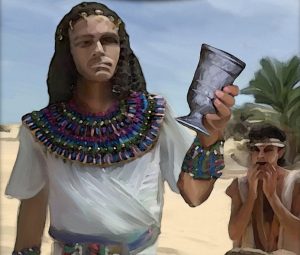
At the beginning of the world, the crow was white.  The Prophet, may God bless him and save him, sent to him and said, “Here’s gold.  Give it to the Muslims.  And here’s lice.  Give it to the Europeans.”

So the crow got up and gave to the Europeans the gold, and he gave to the Muslims the lice.  To punish him, God changed his appearance, and his feathers became black.  When he speaks he says, “Aq, Aq,” that is, “That serves me right!  I betrayed a trust.”

This text is taken (and adapted) from E. Laoust, Cours de Berbère Marocain:  Dialecte du Maroc Central, Paris, 1939, p. 240, numéro 1.

Language and culture

Who are the Imazighen?

 Central Morocco : local tribes and the borders of Tamazight

Une carte des tribus des ImazighenUne carte des tribus des Imazighen


History: Amazigh Roman Emperor


Septimus Severus–Amazigh Roman Emperor

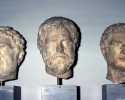
“Septimius Severus (Latin: Lucius Septimius Severus Augustus; 11 April 145 – 4 February 211), also known as Severus, was a Roman Emperor [of African (Berber) origin] from 193 to 211. Severus was born in Leptis Magna in the province of Africa.”

For more information, see the following link (from which came the above paragraph):

//en.wikipedia.org/wiki/Septimius_Severus

The crow

At the beginning of the world, the crow was white.  The Prophet, may God bless him and save him, sent to him and said, “Here’s gold.  Give it to the Muslims.  And here’s lice.  Give it to the Europeans.”

So the crow got up and gave to the Europeans the gold, and he gave to the Muslims the lice.  To punish him, God changed his appearance, and his feathers became black.  When he speaks he says, “Aq, Aq,” that is, “That serves me right!  I betrayed a trust.”


This text is taken (and adapted) from E. Laoust, Cours de Berbère Marocain:  Dialecte du Maroc Central, Paris, 1939, p. 240, numéro 1.


Tamazight Language


Tamazight-French Dictionary (Tamazight of Central Morocco)

Author: Miloud Taifi


Tamazight-Arabic Dictionary

Author: Mohamed Chafik


Tamazight and Tifinagh Links

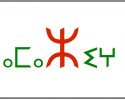
Download the Tifinagh alphabet from the Royal Institute of Amazigh Culture (IRCAM)

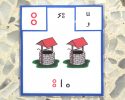
Amazigh School: games for learning the Tifinagh alphabet and Tamazight words

     Listen to the Tifinagh alphabet.

Swathmore.edu: linguistic bibliography of Tamazight

Wikipedia articles:

     Request for a Wikipedia in Tamazight

     Tamazight

     Tifinagh

Bibliomonde.com: the languages of Morocco

Ircam’s Tifinagh ChartTifinagh Chart – Ircam

Amazigh proverbs

Amazigh Proverbs from the Newspaper Agraw Amazigh

Those Before Us Have Spoken

Our ancestors didn’t leave us anything to say; they’ve said it all.

1.    Today at your place, tomorrow at mine.

Emphasizes the need to help each other, since we are all vulnerable to the same types of problems.

2.    Weaving at night brings a big laugh in the day.

Weaving at night (when you can’t see) results in a laughable outcome (which you only realize when the daylight comes).  If you don’t work/buy/etc. in proper conditions, the outcome will be less than desirable.

Amazigh Riddles

Click a question to read the answer.

1.    Nzerx-ac-tt-i-n:  La ttawi awal, ur da tsawal.

       I’ve got one for you:  It takes a word but it doesn’t speak.  What is it?         

2.    Nzerx-ac-tt-i-n:  Ibbi yaman ur immiɣ.

       I’ve got one for you:  It crossed through water but didn’t get wet.  What is it?               

3.    Nzerx-ac-tt-i-n:  Ur da ttaru ɣas s isfuruḍen.

       I’ve got one for you:  It gives birth only by kicks.  What is it?        

4.    Nzerx-ac-tt-i-n:  La-s iddal iswi, ur da-tt ittasi ulɣem.

       I’ve got one for you:  A simple basket covers it, but even a camel can’t lift it.  What is it?      

5.    Nzerx-ac-tt-i-n:  Ilula-d s tamart, immut bla tamart.

       I’ve got one for you:  It was born with a beard but died without a beard.  What is it?      

6.    Nzerx-ac-tt-i-n:  Tegdem da ur tenɣil. 

       I’ve got one for you:  It turned upside down but didn’t spill.  What is it?              

     Amazigh culture has a tradition of riddles.  These riddles are told with a specific formula, somewhat like the English:  “What’s black and white and read all over?  A newspaper.”  First, an introductory phrase is given, announcing “I’m going to tell you a riddle.”  Then one or two short statements are made.  These are not framed as questions but as statements.  However, it is implied that the listener must then guess what object is being described by the cryptic statements.

The introductory phrase is:

Nzerx-ac-tt-i-n

nzerx           +          ac              +          tt           +           i         +           n

first person         indirect object        direct object           “i” sound        “n” of  farness
singular “past”     pronoun:  2 m.s.     pronoun: 3 f.s.        added for       
conjugation of     “to you”                “it,” that is,           pronunciation
the verb “nzer”                                the riddle

    Notice the presence of the indirect and direct object pronoun as well as a direction particle all with one verb.  The only thing that changes in this introductory phrase is the indirect object pronoun, which may be   acamawen ,  or  awent  depending on who is being addressed.  The verb  nzer   here functionally means “to tell a riddle” and technically means just “to tell”:  “I tell it to you.”

    There are some regional variations:  some areas use the masculine third person singular direct object pronoun  t (without the doubling of the consonant) instead of the feminine  tt ; when that is used sometimes the  for pronunciation is not added; some regions use slightly different indirect object pronouns (like  ak , with a hard or a fricative “k” sound, instead of  ac );  and sometimes there are some slight changes to the verb.  Some regions use  ɣ  instead of   x  for the first person singular verb ending.  Some regions also modify some of the verb consonants or use a different verb.  There are at least five variations:  bzer , zunzerzuzzerḥeji , and  qqen.

    So, you say the introductory phrase.  Then you say the cryptic statements.  You can leave it at that, or you can add a phrase like:  Mag-gmes?   or   Matta ntta?  (What is it?) or  Ini mag-gmes   or   Ini matta ntta   (Say what it is.).  Remember if the “it” you are talking about is feminine or plural, these questions change to things like:
May tmes?   or   Matta nttat?   etc., according to the gender and number of the “it.”

    Most of these traditional riddles are virtually impossible for an outsider to guess correctly.  They often involve intricate details of agricultural and nomadic life.

 Ddan-d iwaliwen-ad zeg E. Laoust, Cours de Berbère Marocain:  Dialecte du Maroc Central, Paris, 1939, p. 269.


1. tabratt     a letter

Return to top of page


2. amalu     a shadow

Return to top of page


3. tagmart     a mare

Return to top of page


4. tasraft     an underground storage area

Return to top of page


5.  agertil     a reed mat

Return to top of page


6.  tamaẓẓayt     an udder

Return to top of page

A warm welcome to you, Amazigh brothers and sisters, visiting our site!

We hope that this site can be a source of truth for us Imazighen, a place where we find truth that brings genuine freedom. Knowing the truth gives whoever searches for it wisdom of discernment and the strength to reject lies and flee from them.

God desires that you be a true Amazigh (that is, a free person).
We hope that you find here the food that you truly need, the nourishment that gives real life to the human soul.

May your time here be helpful, and thanks for your visit.


Contact : Send us your questions and comments

Amazigh Riddles

Click a question to read the answer.

1.    Nzerx-ac-tt-i-n:  La ttawi awal, ur da tsawal.

       I’ve got one for you:  It takes a word but it doesn’t speak.  What is it?

2.    Nzerx-ac-tt-i-n:  Ibbi yaman ur immiɣ.

       I’ve got one for you:  It crossed through water but didn’t get wet.  What is it?

3.    Nzerx-ac-tt-i-n:  Ur da ttaru ɣas s isfuruḍen.

       I’ve got one for you:  It gives birth only by kicks.  What is it?

4.    Nzerx-ac-tt-i-n:  La-s iddal iswi, ur da-tt ittasi ulɣem.

       I’ve got one for you:  A simple basket covers it, but even a camel can’t lift it.  What is it?

5.    Nzerx-ac-tt-i-n:  Ilula-d s tamart, immut bla tamart.

       I’ve got one for you:  It was born with a beard but died without a beard.  What is it?

6.    Nzerx-ac-tt-i-n:  Tegdem da ur tenɣil.

       I’ve got one for you:  It turned upside down but didn’t spill.  What is it?

Amazigh culture has a tradition of riddles.  These riddles are told with a specific formula, somewhat like the English:  “What’s black and white and read all over?  A newspaper.”  First, an introductory phrase is given, announcing “I’m going to tell you a riddle.”  Then one or two short statements are made.  These are not framed as questions but as statements.  However, it is implied that the listener must then guess what object is being described by the cryptic statements.

The introductory phrase is:

Nzerx-ac-tt-i-n

nzerx           +          ac              +          tt           +           i         +           n

first person         indirect object        direct object           “i” sound        “n” of  farness
singular “past”     pronoun:  2 m.s.     pronoun: 3 f.s.        added for
conjugation of     “to you”                “it,” that is,           pronunciation
the verb “nzer”                                the riddle

Notice the presence of the indirect and direct object pronoun as well as a direction particle all with one verb.  The only thing that changes in this introductory phrase is the indirect object pronoun, which may be   acamawen ,  or  awent  depending on who is being addressed.  The verb  nzer   here functionally means “to tell a riddle” and technically means just “to tell”:  “I tell it to you.”

There are some regional variations:  some areas use the masculine third person singular direct object pronoun  t (without the doubling of the consonant) instead of the feminine  tt ; when that is used sometimes the  for pronunciation is not added; some regions use slightly different indirect object pronouns (like  ak , with a hard or a fricative “k” sound, instead of  ac );  and sometimes there are some slight changes to the verb.  Some regions use  ɣ  instead of   x  for the first person singular verb ending.  Some regions also modify some of the verb consonants or use a different verb.  There are at least five variations:  bzer , zunzerzuzzerḥeji , and  qqen.

So, you say the introductory phrase.  Then you say the cryptic statements.  You can leave it at that, or you can add a phrase like:  Mag-gmes?   or   Matta ntta?  (What is it?) or  Ini mag-gmes   or   Ini matta ntta   (Say what it is.).  Remember if the “it” you are talking about is feminine or plural, these questions change to things like:
May tmes?   or   Matta nttat?   etc., according to the gender and number of the “it.”

Most of these traditional riddles are virtually impossible for an outsider to guess correctly.  They often involve intricate details of agricultural and nomadic life.

Ddan-d iwaliwen-ad zeg E. Laoust, Cours de Berbère Marocain:  Dialecte du Maroc Central, Paris, 1939, p. 269.

1. tabratt     a letter

Return to top of page

2. amalu     a shadow

Return to top of page

3. tagmart     a mare

Return to top of page

4. tasraft     an underground storage area

Return to top of page

5.  agertil     a reed mat

Return to top of page

6.  tamaẓẓayt     an udder

Return to top of page

Free downloads

Attribution-NonCommercial-NoDerivatives 4.0 International

Copyright: Creative Commons license

Application for Android: the Bible in Tamazight (Lctab n rebbi)

Download it from the Google Playstore

Application for iOS: Progressive Web App: the Bible in Tamazight (Lctab n rebbi)

Open the Progressive Web App of the Bible in TamazightClick this link and you can open it in your browser

Music

Download entire albums (mp3)

Agraw n rebbi (mp3-zip – 13 files – 66 MB)

Izlan (mp3-zip – 10 files – 51 MB)

Rebbi nu (mp3-zip – 6 files – 6 MB)

Idda-d rebbi (mp3-zip – 5 files – 10 MB)

Radio

Download entire radio programs (mp3)

Genesis (mp3-zip – 128 files – 503 MB) In one large zip file, or also available in 4 smaller zip files:

               Genesis Part 1 (mp3-zip – 33 files – 134 MB)

               Genesis Part 2 (mp3-zip – 33 files – 188 MB)

               Genesis Part 3 (mp3-zip – 30 files – 114 MB)

               Genesis Part 4 (mp3-zip – 32 files – 122 MB)

What We Believe (mp3-zip – 26 files – 98 MB)

Way of Righteousness (mp3-zip – 100 files – 355 MB)  In one large zip file, or also available in 3 smaller zip files:

                Way of Righteousness Part 1 (mp3-zip – 33 files – 121 MB)

                Way of Righteousness Part 2 (mp3-zip – 33 files – 116 MB)

                Way of Righteousness Part 3 (mp3-zip – 34 files – 118 MB)

All that the Prophets have Spoken (mp3-zip – 74 files – 366 MB)  In one large zip file, or also available in 3 smaller zip files:

                All that the Prophets have Spoken Part 1 (mp3-zip – 26 files – 149 MB)

                All that the Prophets have Spoken Part 2 (mp3-zip – 24 files – 110 MB)

                All that the Prophets have Spoken Part 3 (mp3-zip – 24 files – 106 MB)

Famous People of the Bible:  Men and Women first half (mp3-zip – 69 files – 319 MB) and Famous People of the Bible:  Men and Women second half (mp3-zip – 104 files – 475 MB).  In two large zip files, or also available in 8 smaller zip files:

                Famous People of the Bible Part 1 (mp3-zip – 19 files – 88 MB)

                Famous People of the Bible Part 2 (mp3-zip – 26 files – 120 MB)

                Famous People of the Bible Part 3 (mp3-zip – 24 files – 111 MB)

                Famous People of the Bible Part 4 (mp3-zip – 19 files – 87 MB)

                Famous People of the Bible Part 5 (mp3-zip – 24 files – 109 MB)

                Famous People of the Bible Part 6 (mp3-zip – 23 files – 105 MB)

                Famous People of the Bible Part 7 (mp3-zip -27 files – 125 MB)

                Famous People of the Bible Part 8 (mp3-zip -11 files – 50 MB)

On the Way (mp3-zip – 79 files – 402 MB)  In one large zip file, or also available in 4 smaller zip files:

                On the Way Part 1 (mp3-zip – 20 files – 70 MB)

                On the Way Part 2 (mp3-zip – 20 files – 112 MB)

                On the Way Part 3 (mp3-zip – 20 files – 114 MB)

                On the Way Part 4 (mp3-zip – 19 files – 106 MB)

The Disciple first half (mp3-zip – 80 files – 391 MB) and The Disciple second half (mp3-zip – 86 files – 392 MB).   In 2 large zip files, or also available in 8 smaller zip files:

               The Disciple part 1 (mp3-zip – 20 files – 95 MB)

               The Disciple part 2 (mp3-zip – 20 files – 80 MB)

               The Disciple part 3 (mp3-zip – 20 files – 102 MB)

               The Disciple part 4 (mp3-zip – 20 files – 115 MB)

               The Disciple part 5 (mp3-zip – 20 files – 91 MB)

               The Disciple part 6 (mp3-zip – 20 files – 91 MB)

               The Disciple part 7 (mp3-zip – 24 files – 111 MB)

               The Disciple part 8 (mp3-zip – 22 files – 101 MB)

Study of the Gospel of John (mp3-zip – 46 files – 219 MB) In one large zip file, or also available in 2 smaller zip files:

                Study of the Gospel of John Part 1 (mp3-zip – 24 files – 110 MB)

                Study of the Gospel of John Part 2 (mp3-zip – 22 files – 109 MB)

The Christian Family (mp3-zip – 10 files – 46 MB)

The Five Love Languages of Children (mp3-zip – 10 files – 46 MB)

Raising children in the love of God (mp3-zip – 10 files – 44 MO)

The Kingdom of God (mp3-zip – 10 files – 45 MB)

The Greatness of God (mp3-zip – 10 files – 46 MB)

The Person and Work of the Holy Spirit (mp3-zip – 10 files – 44 MB)

The Nature of the Church (mp3-zip – 10 files – 45 MB)

Satan:  who he is and what he does (mp3-zip – 10 files – 47MB)

Pandemics in the Bible (mp3-zip – 10 files – 46 MB)

Where did Jesus say I am God worship me (mp3-zip – 57 files – 259 MB).   In one large zip file, or also available in 2 smaller zip files:

                Where did Jesus say I am God worship me part 1 (mp3-zip – 28 files – 124 MB)

                Where did Jesus say I am God worship me part 2 (mp3-zip – 29 files – 135 MB)

Answers to Various Questions (mp3-zip – 103 files – 488 MB).  In one large zip file, or also available in 4 smaller zip files:

                Answers to Various Questions part 1 (mp3-zip – 25 files – 118 MB)

                Answers to Various Questions part 2 (mp3-zip – 25 files – 118 MB)

                Answers to Various Questions part 3 (mp3-zip – 25 files – 119 MB)

                Answers to Various Questions part 4 (mp3-zip – 28 files – 132 MB)

Questions concerning Jesus Christ (mp3-zip – 43 files – 203 MB).  In one large zip file or also available in 2 smaller zip files:

                Questions concerning Jesus Christ part 1 (mp3-zip – 22 files – 104 MB)

                Questions concerning Jesus Christ part 2 (mp3-zip – 21 files – 98 MB)

Questions about the Holy Spirit (mp3-zip – 24 files – 113 MB)

Questions about salvation (mp3-zip – 37 files – 156 MB).  In one large zip file or also available in 2 smaller zip files:

                Questions about salvation part 1 (mp3-zip – 17 files – 79 MB)

                Questions about salvation part 2 (mp3-zip – 17 files – 77 MB)

Questions about the Bible (mp3-zip – 49 files – 221 MO).  In one large zip file or also available in 2 smaller zip files:

                Questions about the Bible part 1 (mp3-zip – 24 files – 108 MO)

                Questions about the Bible part 2 (mp3-zip – 25 files – 113 MO)

NEW:  Questions about the church (mp3-zip – 31 files – 141 MO)

NEW:  Questions about humanity (mp3-zip – 14 files – 62 MO)

The Parables of Jesus (mp3-zip – 46 files – 214 MB)  In one large zip file, or also available in 2 smaller zip files:

                The Parables of Jesus part 1 (mp3-zip – 23 files – 109 MB)

                The Parables of Jesus part 2 (mp3-zip – 23 files – 105 MB)

The Miracles and the Healings of Jesus (mp3-zip – 37 files – 176 MB).  In one large zip file, or also available in 2 smaller zip files:

                The Miracles and the Healings of Jesus part 1 (mp3-zip – 21 files – 99 MB)

                The Miracles and the Healings of Jesus part 2 (mp3-zip – 16 files – 76 MB)

Study of the book of Romans (mp3-zip – 48 files – 228 MB).  In one large zip file, or also available in 2 smaller zip files:

                Study of the book of Romans part 1 (mp3-zip – 24 files – 114 MB)

                Study of the book of Romans part 2 (mp3-zip – 24 files – 114 MB)

The Life of the Apostle Paul (mp3-zip – 16 files – 73 MB)

Study of the Gospel of Matthew (mp3-zip – 117 files – 538 MB).  In one large zip file, or also available in 5 smaller zip files:

                Study of the Gospel of Matthew part 1 (mp3-zip – 21 files – 97 MB)

                Study of the Gospel of Matthew part 2 (mp3-zip – 24 files – 110 MB)

                Study of the Gospel of Matthew part 3 (mp3-zip – 24 files – 108 MB)

                Study of the Gospel of Matthew part 4 (mp3-zip – 24 files – 109 MB)

                Study of the Gospel of Matthew part 5 (mp3-zip – 24 files – 114 MB)

Study of the Gospel of Mark (mp3-zip – 67 files – 316 MB)  In one large zip file, or also available in 3 smaller zip files:

                Study of the Gospel of Marc part 1 (mp3-zip – 21 files – 99 MB)

                Study of the Gospel of Marc part 2 (mp3-zip – 24 files – 113 MB)

                Study of the Gospel of Marc part 3 (mp3-zip – 22 files – 103 MB)

NEW: The complete study of the Old Testament (mp3-zip – 14 files – 62 MO)

NEW: Treasures in Genesis first half (mp3-zip – 76 files – 354 MB)  and Treasures in Genesis second half (mp3-zip – 56 files – 252 MB.   In two large zip files, or also available in 5 smaller zip files:

                Treasures in Genesis part 1 (mp3-zip – 30 files – 141 MB)

                Treasures in Genesis part 2 (mp3-zip – 32 files – 150 MB)

                Treasures in Genesis part 3 (mp3-zip – 30 files – 134 MB)

                Treasures in Genesis part 4 (mp3-zip – 22 files – 98 MB)

                Treasures in Genesis part 5 (mp3-zip – 18 files – 82 MB)

NEW: Exodus: from Slavery to Freedom first half (mp3-zip – 36 files – 161 MB) .  In one large zip file, or also available in 2 smaller zip files:

                Exodus: from Slavery to Freedom part 1 (mp3-zip – 20 files – 90 MB)

                Exodus: from Slavery to Freedom part 2 (mp3-zip – 16 files – 71 MB)

Audio

Download the audio for the following titles (mp3)

L’Histoire de Dieu (mp3-zip – 8 files – 17 MB) God’s Story

La vie d’Adam et Ève (mp3-zip – 5 files – 22 MB) The Life of Adam and Eve

La vie de Noé (mp3 – 1 file – 17 MB) The life of Noah

La vie d’Abraham (mp3-zip – 15 files – 65 MB) The Life of Abraham

La vie d’Isaac et la vie de Jacob (mp3-zip – 12 files – 67 MB)  The Life of Isaac and Jacob

La vie de Joseph (mp3-zip – 13 files – 73 MB) The Life of Joseph

The Book of Genesis (mp3-zip – 50 files – 291 MB).  In one large zip file, or also available in 2 smaller zip files:

                The Book of Genesis part 1 (mp3-zip – 25 files – 130 MB)

                The Book of Genesis part 2 (mp3-zip – 25 files – 161 MB)

La vie de Moïse (mp3-zip – 46 files – 49 MB) The Life of Moses

La vie de Ruth (mp3 – 1 file – 4 MB) The life of Ruth

La vie de Samuel (mp3-zip – 21 files – 104 MB)  The Life of Samuel

La vie de David (mp3-zip – 18 files – 85 MB) The Life of David

La vie de Daniel (mp3-zip – 12 files – 59 MB) The life of Daniel

La vie de Jonas (mp3 – 1 file – 3 MB) The life of Jonah (Yunas)

L’Evangile de Jésus Christ selon Matthieu (mp3-zip – 28 files – 174 MB) The Gospel of Matthew

L’Evangile de Jésus Christ selon Marc (mp3-zip – 16 files – 77 MB) The Gospel of Mark

L’Evangile de Jésus Christ selon Luc (mp3-zip – 25 files – 60 MB) The Gospel of Luke

L’Evangile de Jésus Christ selon Jean (mp3-zip – 21 fichiers – 92 MB) The Gospel of John

Les Actes des Apôtres (mp3-zip – 4 files – 40 MB) Acts of the Apostles

La lettre de Paul aux Romains (mp3-zip – 16 files – 52 MB) The letter of Paul to the Romans

La première lettre de Paul aux Corinthians (mp3-zip – 16 files – 53 MB)  The first letter of Paul to the Corinthians

La deuxième lettre de Paul aux Corinthians (mp3-zip – 13 files – 31 MB)  The second letter of Paul to the Corinthians

La lettre de Paul aux Galates (mp3-zip – 6 files – 18 MB) The letter of Paul to the Galatians

La lettre de Paul aux Ephesiens  (mp3-zip – 6 files – 24 MB)  The letter of Paul to the Ephesians

La lettre de Paul aux Philippiens (mp3-zip – 4 files – 17 MB)  The letter of Paul to the Philippians

La lettre de Paul aux Colossiens (mp3-zip – 4 fichiers – 18 MB) The letter of Paul to the Colossians

La première lettre de Paul aux Thessaloniciens (mp3-zip – 5 files – 12 MB)  The first letter of Paul to the Thessalonians

La deuxième lettre de Paul aux Thessaloniciens (mp3-zip – 3 files – 6 MB) The second letter of Paul to the Thessalonians

La première lettre de Paul à Timothée (mp3-zip – 7 files – 24 MB)  The first letter of Paul to Timothy

La deuxième lettre de Paul à Timothée (mp3-zip – 4 files – 16 MB) The second letter of Paul to Timothy

La lettre de Paul à Tite (mp3 – 3 files – 7 MB) The letter of Paul to Titus

La lettre de Paul à Philémon (mp3 – 1 file – 3 MB) The letter of Paul to Philemon

La lettre aux Hébreux (mp3-zip – 13 files – 39 MB) The letter to the Hebrews

La lettre de Jacques (mp3-zip – 5 files – 20 MB) The letter of James

NEW: La première lettre de Pierre (mp3-zip – 5 files – 15 MB)  The first letter of Peter

NEW: La deuxième lettre de Pierre (mp3-zip – 3 files – 10 MB)  The second letter of Peter

La première lettre de l’apôtre Jean (mp3-zip – 5 files – 20 MB) The first letter of the apostle John

La deuxième lettre de l’apôtre Jean (mp3 – 1 file – 2 MB) The second letter of the apostle John

La troisième lettre de l’apôtre Jean (mp3 – 1 file – 2 MB) The third letter of the apostle John

La lettre de Jude (mp3 – 1 file – 4.3 MB) The letter of Jude

Apocalypse (mp3-zip-22 files – 60 MB) Revelation

Les Histoires tirées de la Parole de Dieu (mp3-zip – 22 files – 118 MB) Stories from the Word of God

Video

Download the following movies in low resolution format (mp4)

L’Histoire de Dieu (486 MB) God’s Story

L’Histoire des prophètes (149 MB) Story of the Prophets

La Bonne Nouvelle (399 MB) The Good News

Film de l’évangile de Matthieu (mp4-zip – 28 files – 842 MB) Film of the Gospel of Matthew

NEW: Film de l’évangile de Luc (mp4-zip – 24 files – 1.2 GB) Film of the Gospel of Luke

Le Film de Jésus (1.36 GB) The Jesus Film

Jésus, un regard de femme (Marie de Magdala) (211 MB)  Magdalena – Released from Shame

Le Bon Samaritain (66 MB)  The Good Samaritan

Un homme et ses deux fils / Le Fils Prodique (75 MB) The Prodigal Son

Le Grand Repas / La Grande Fête (70 MB) The Great Feast

L’histoire de Zachée (108 MB) Zacchaeus

NEW: Film de l’évangile de Jean (mp4-zip – 21 files – 706 MB) Film of the Gospel of John

Les Actes des Apôtres 1 (564 MB) Acts of the Apostles part 1

Les Actes des Apôtres 2 (497 MB) Acts of the Apostles part 2

Les Actes des Apôtres 3 (597 MB) Acts of the Apostles part 3

Les Actes des Apôtres 4 (635 MB) Acts of the Apostles part 4

History of the Imazighen (411 MB) (The film is in French.)

 Download the following movies in high resolution format (mp4)

L’Histoire de Dieu (843 MB) God’s Story

L’Histoire des prophètes (149 MB) Story of the Prophets

La Bonne Nouvelle (787 MB) The Good News

NEW: Ruth (1.1 GB)

Psalm of David 1 (99 MB)

Psalm of David 8 (93 MB)

Psalm of David 23 (108 MB)

Psalm of David 51 (67 MB)

Psalm of David 56 (91 MB)

Psalm of David 57 (90 MB)

NEW: Amos (989 MB)

Film de l’évangile de Matthieu (1st part – ch 1 – 14 – 3 GB) Film of the Gospel of Matthew

Film de l’évangile de Matthieu (2nd part – ch 15 – 28 – 3.4 GB) Film of the Gospel of Matthew

NEW: Film de l’évangile de Luc (1st part – ch 1 – 12 – 5.3 GB) Film of the Gospel of Luke

NEW: Film de l’évangile de Luc (2nd part – ch 13 – 24 – 4 GB) Film of the Gospel of Luke

Le Film de Jésus (2.31 GB) The Jesus Film

Jésus, un regard de femme (Marie de Magdala) (887 MB)  Magdalena – Released from Shame

Le Bon Samaritain (106 MB) The Good Samaritan

Un homme et ses deux fils / Le Fils Prodique (117 MB) The Prodigal Son

Le Grand Repas / La Grande Fête (132 MB) The Great Feast

L’histoire de Zachée (169 MB) Zacchaeus

NEW: Film de l’évangile de Jean (1st part – ch 1 – 10 – 3 GB) Film of the Gospel of John

NEW: Film de l’évangile de Jean (2nd part – ch 11 – 21 – 2.4 GB) Film of the Gospel of John

Les Actes des Apôtres 1 (908 MB) Acts of the Apostles part 1

Les Actes des Apôtres 2 (797 MB) Acts of the Apostles part 2

Les Actes des Apôtres 3 (958 MB) Acts of the Apostles part 3

Les Actes des Apôtres 4 (1 GB) Acts of the Apostles part 4

History of the Imazighen (1.17 GB) (The film is in French.)

Music videos

How Blessed I Am, the Lord has Come to Me (13 MB)

Bless the Lord, O My Soul (28 MB)

When I Put Jesus First (53 MB)

O Jesus Christ You’re the One who Is (40 MB)

God Welcomes Us (39 MB)

Noah’s Ark (43 MB)

In My Life Lord Be Glorified (60 MB)

At the Cross (23 MB)

Texts

Download entire texts

Good News (La Bonne Nouvelle)

The Gospel of Luke and the Acts of the Apostles (L’Evangile de Jésus Christ selon Luc et les Actes des Apôtres)

Paul’s Letters to the Ephesians and to the Philippians (Les Lettres de l’Apôtre Paul aux Ephésiens et aux Philippiens)

The Prodigal Son (Le Fils Prodigue)

The Good Samaritan (Le Bon Samaritain)

The Great Feast (La Grande Fête)

Zacchaeus (Zachée)

Stories from the Word of God (Histoires tirées de la Parole de Dieu)

Agraw n Rebbi (Lyrics to song album Agraw n Rebbi)

Tamdyazt Songs (Lyrics to songs in tamdyazt or tanshatt style)

ISO Files

For those who need to burn DVDs for regular DVD players, you need to download one of the following *.ISO files. Once downloaded, right click on the file. Click on “Open with….” and choose “Windows Disk Image Burner”. Put a blank DVD-R disk in your drive and burn your DVD.

Acts DVD Disk 1 PAL

Acts DVD Disk 2 PAL

Jesus Film DVD PAL

Magdalena Film DVD PAL

The testimony of Djedjiga et Belkacem Dadah

Bonjour chère sœur !

Q

Aujourd’hui tu vas nous parler d’une femme qui a pu être délivrée des mauvais liens qui l’ont enchaînée durant toute sa vie. Comment cela s’est-il passé ?

R

C’est très difficile pour une femme d’oublier ou de mettre de côté toutes ces habitudes, toute une vie imprégnée des pratiques ancestrales. C’est très difficile, pour ne pas dire impossible; mais rien n’est difficile ou impossible à notre Dieu! Personnellement, j’y attachais beaucoup d’importance, mais avec l’aide de Dieu je suis délivrée complètement de tous ces liens et ces chaînes.

Q

Peux-tu nous expliquer comment tu as vécu cette libération, qui t’a aidée à comprendre ces choses? Serais-ce ton mari qui t’a poussée?

R

Non ce n’est pas mon mari! C’est lui qui s’est converti le premier mais il ne m’a jamais poussée ou obligée, c’est Dieu qui a travaillé en moi et qui m’a appelée ; et j’ai répondu! C’est moi qui ai choisi de suivre Jésus, qui est mon Sauveur ! Je suis donc allée à L’Eglise des Ouadhias pour voir de mes propres yeux de ce qui s’y passait et qui était ce Jésus que mon mari aimait tant.

Q

Qu’est-ce qui t’a attirée dans ce que tu as vu et qu’est-ce qui t’a amenée à croire en Jésus?

R

J’ai reconnu que Jésus est le Sauveur et j’ai ressenti son amour. En général, en Kabylie, nous vivons comme des orphelins alors que nous avons des parents. Je me sentais comme une orpheline, comme étant entre ciel et terre sans aucune attache ou racine. J’ai commencé à m’intéresser à la lecture de la parole de Dieu, mon mari m’expliquait beaucoup de choses quand je le lui demandais, et j’ai vu que seul Jésus pouvait me consoler de toute cette frustration que j’avais vécue jusqu’à ce jour là.

Q

A-t-on fait pression sur toi ou est-ce de ton propre chef?

R

Je t’ai déjà dit que ce n’est pas mon mari; c’est de ma propre volonté que j’ai décidé de suivre Jésus car je l’ai accepté en tant que mon Sauveur. Bien sûr mon mari a beaucoup prié pour moi mais jamais il a osé faire pression; ni lui ni personne d’autre.

Q

Peux-tu nous expliquer ce qui a été déterminant pour ta conversion et ce qui a brisé les chaînes qui te liaient ?

R de Belkacem

La première fois que ma femme est venue à l’église, c’était pendant le mois de Ramadan. Elle avait l’habitude de jeûner fidèlement. Cette année là, c’était le 13ème jour du Ramadan, elle a vu toutes les sœurs qui mangeaient puis elle a mangé; elle a décidé de ne plus accepter ce lien du Ramadan. Ce qui a été le déclic de sa conversion c’était aussi son accouchement miraculeux. Elle devait subir une césarienne, au moment de monter sur la table d’opération elle a prié, puis elle s’est évanouie tout de suite après. Pendant son évanouissement elle a vu Jésus descendre, venir vers elle et la prendre dans ses bras pour la relever. Les médecins étaient devant un cas de vie ou de mort, le risque de perdre la mère ou le bébé ou les deux même, était grand. Quand le bébé fut né, Myriam notre fille, ma femme a reconnu que Jésus seul est le Sauveur de son âme, Il l’a en quelque sorte sauvée de la mort, autant physique que spirituelle. C’est ce jour là qu’elle a donné sa vie au Seigneur en disant qu’il n’y a pas d’autre chemin de salut que Jésus-Christ le Fils de Dieu. Elle l’a reconnu comme son Sauveur et son Seigneur, et dès cet instant, elle a commencé à vivre la joie du Seigneur, à lire la parole de Dieu, puis elle a fréquenté l’église en tant que membre actif, sa vie a changé, elle a été complètement transformée.

Q

Gloire à Dieu! Racontes-nous maintenant en quoi tu vois ce changement, comment peux-tu l’exprimer, que ce soit entre ton mari, tes enfants mais aussi avec ton entourage?

R

Premièrement je loue le Seigneur de ce qu’il a fait pour moi, car avant ma conversion je ne reconnaissais même pas mon mari en tant que mari, je ne l’aimais pas du tout, je le détestais. Il y a des femmes qui me disent qu’elles sont tout le temps pressées de voir leur mari, mais moi c’était le contraire ! Je n’aimais pas la tombée du jour car je redoutais le moment de le voir rentrer. En plus de cela, je suis tombée malade, et plusieurs fois, je lui ai demandé de se remarier, c’est moi-même qui le poussais à se remarier, mais lui me disait : il n’en est pas question, je t’ai ramené de chez toi en bonne santé, c’est à moi de te soigner, et je te soignerai.

Q

Tu étais malade?

R

Oui mais pas médicalement parlant; Satan voulait nous séparer, m’arracher à mon mari.

R Belkacem

Ma femme était méprisée dans sa famille car elle est la septième fille de la famille. Ses parents lui en voulaient d’être née car dans notre culture ce ne sont que les garçons qui ont de la valeur et reçoivent l’honneur à la maison; toute la famille l’avait rejetée.

Elle a vécu avec ce sentiment de ne rien valoir, d’être rejetée, jusqu’à ce qu’elle découvre qu’en Christ elle a de la valeur. Mais il a fallut beaucoup de temps et d’enseignements bibliques pour arriver à ce degré de s’accepter et de s’aimer soi-même selon les principes bibliques. Après le jour de sa délivrance, elle a commencé à connaître ce que c’est que l’amour, et elle est devenue une nouvelle créature, elle est devenue cette femme que j’attendais d’avoir !!

Grâce à l’enseignement qu’elle a suivi à l’église, elle a découvert l’amour, elle a apprit ce que c’est que la vie de couple et l’amour conjugal.

Q

Tu as donc retrouvé ta femme?

R

C’est vrai, j’ai retrouvé ma femme, car l’ennemi a essayé de nous diviser, il a essayé de me prendre ma femme mais le Seigneur a été plus fort, gloire à Dieu !

Q

Maintenant nous allons demander à notre sœur de nous donner un exemple de sa vie nouvelle déliée de tous ces liens, et de nous parler du changement dans sa famille

R

C’est vrai que je suis délivrée et c’est vrai que maintenant je connais l’amour en général, l’amour pour mes enfants, pour mon mari, pour ma famille, pour mes voisins et voisines, et même pour mes ennemis.

Aujourd’hui j’aime mes enfants moi qui ne les aimais pas et les frappais à tout bout de champs, j’aime mon mari moi qui le détestais et voulais divorcer, j’aime ma famille eux qui m’avaient méprisée, dénigrée et rejetée, j’aime mes voisins eux qui me cherchent toujours la petite bête, j’aime mes ennemis car ils ne savent pas ce qu’ils font et je les plains d’être méchants, car l’Amour c’est quelques chose de merveilleux et très bon et beau devant notre Dieu.

Q

Peux-tu nous expliquer comment tu ressens cet amour envers ton mari en nous donnant un exemple?

R

L’année dernière par exemple, pendant la préparation de la fête de Noël, j’ai beaucoup négligé mon mari, car je faisais partie de la chorale. Au moment où je devais me préparer à monter sur l’estrade, le Saint-Esprit m’a saisie et m’a encouragée à aller dire à mon mari que je l’aimais. Comme je n’avais plus le temps d’aller le lui dire, j’ai appelé une sœur en lui demandant de le faire à ma place. C’est une chose qui ne se fait pas du tout et moi-même j’étais surprise de ma demande. Toutefois j’ai reconnu plus tard que c’était le Saint-Esprit qui voulait fortifier mon mari ce jour là afin qu’il mène à bien son service à l’accueil. Il m’a délivrée alors de la timidité pour que je puisse chanter sans trembler. J’aime mon mari aujourd’hui beaucoup plus que je ne le détestais alors

Q

Etais-tu très timide avant ?

R

Oui ! Par exemple quand nous allions dans ma famille pour leur rendre visite ou pour y passer la nuit, je n’acceptais pas qu’il s’approche de moi devant eux.

Q

Que peux-tu dire maintenant aux femmes et aux sœurs qui nous écoutent ?

R

Je voudrai les exhorter d’aimer leurs maris, de chercher à les comprendre. Il est aussi important que leurs maris les comprennent car il est dit dans la Genèse: Adam et Eve deviendront un et s’entraideront. Je voudrai leur dire d’essayer d’avoir une entente dès le début, car si cette entente n’existe pas, vous n’irez pas loin.

Q

Donc, tu n’es plus timide?

R

Il y a deux genres de timidité chez nous: celle qui a le sens du respect, cela est bon et cela vient de Dieu, mais il y a un autre genre de timidité qui paralyse la personne et qui fait souffrir; celle là vient du diable qui essaye de nous enlever des bénédictions.

Q

Un dernier mot, frère?

R

Lors de notre conversion, nous avions pour bagages beaucoup d’habitudes mauvaises, surtout dans mon cas où je suis sorti d’une famille de marabouts. L’ennemi a en effet dressé un mur entre la femme et l’homme; un des ingrédients avec lequel il a bâtit ce mur: c’est la timidité. Aujourd’hui Jésus nous a délivrés de ce carcan de timidité en nous exhortant à nous aimer les uns et les autres. Il nous a donné l’exemple du parfait amour: le père aime le fils, le fils aime le père. Le mari et la femme doivent s’aimer d’un parfait amour pour que leur vie soit fleurie tel un arbre au printemps.

Q

Peux-tu nous dire un mot sur tes enfants?

R

Nos enfants ont eu la chance d’être éduqués dans une famille chrétienne, parmi leurs frères et sœurs chrétiens; Aujourd’hui ils grandissent dans l’église comme nous, ils bénéficient d’un enseignement comme nous les adultes, ils apprennent à se confier en Dieu, ils sont comme des exemples pour les autres enfants. Dieu est toujours avec eux: par exemple ma fille de 16 ans lors des compositions ou des examens elle prie avant de sortir de la maison et pendant tout le temps que l’examen dure, elle se confie en Lui. Elle a toujours eu de bonnes notes grâce à Dieu qui la rend capable et fortifie sa mémoire. Même les enfants quand ils viennent à Christ expérimentent eux-mêmes combien le Seigneur est bon!

Q

Louons le Seigneur, la gloire lui revient ! Prions que beaucoup de familles soient délivrées ainsi de tous les liens et qu’elles puissent connaître la joie, la paix et l’amour que donne le Seigneur. Amen.


Links

Application for Android: the Bible in Tamazight (Lctab n rebbi)

Download it from the Google Playstore

Morocco

TASHELHIT (Souss: south-western region)

 Amsiggel

 Tashelhit

TARIFIT site 1 or Tarifit site 2 (northern region)

Moroccan Arabic (Testimonies)

Moroccan Arabic (Injil)

Love Maroc


Amazigh (Berber) Culture

Royal Institute of Amazigh Culture (IRCAM) Morocco

Wikipedia articles:

Amazigh

Berber

Berber cuisine

Judeo-Berber

Amazigh Proverbs

Berber Literature

Middle Atlas

Portail des Berbères (links to articles on Berber people and history)

Berberes.com : Amazigh culture, activities, history, language, articles

Bibliography of resources on Amazigh culture and language

Algeria

TAQBAYLIT (Kabyle Berber of Algeria)

Aceb.net

Tamusni.org

Radiokabyle.com

TACHAOUIT (Chaoui Berber of Algeria)

Injilchaoui.org

Injilchaoui.com

Arabic Language Sites

Maarifa

Sabeel Media


Other

Jésus-Islam.fr

Pin It on Pinterest